Archives
- 2026-10
- 2026-09
- 2026-08
- 2026-07
- 2026-06
- 2026-05
- 2026-04
- 2026-03
- 2026-02
- 2026-01
- 2025-12
- 2025-11
- 2025-10
- 2025-09
- 2025-03
- 2025-02
- 2025-01
- 2024-12
- 2024-11
- 2024-10
- 2024-09
- 2024-08
- 2024-07
- 2024-06
- 2024-05
- 2024-04
- 2024-03
- 2024-02
- 2024-01
- 2023-12
- 2023-11
- 2023-10
- 2023-09
- 2023-08
- 2023-07
- 2023-06
- 2023-05
- 2023-04
- 2023-03
- 2023-02
- 2023-01
- 2022-12
- 2022-11
- 2022-10
- 2022-09
- 2022-08
- 2022-07
- 2022-06
- 2022-05
- 2022-04
- 2022-03
- 2022-02
- 2022-01
-
br Ghrelin actions in the
2022-02-12
Ghrelin actions in the central nervous system Ghrelin induces thymopoeisis GHS-R1a is expressed in immune cells, including thymocytes and T-cells [13]. Infusion of ghrelin increases the number of thymocytes and thymus size in 14-, 20-, and 24-month-old mice, and with decreased thymic adiposity
-
More recently Dal Peraro and
2022-02-12
More recently, Dal Peraro and coworkers [38] carried out 4 μs CG MD simulations of GS with six randomly placed C9915-55 peptides embedded into a synaptic plasma bilayer model. This lipid raft model was constituted by 32 different hyPerFUsion™ high-fidelity PCR Kit and cholesterol (54.74%). In this
-
Sephin1 Also a large number of small molecules
2022-02-12
Also a large number of small molecules are potent G-quadruplex ligands that exhibit anti-proliferative activity in cells [39,48]. Several small molecules, for example cyclic naphthalene diimide derivative [43], cationic porphyrins [2,[49], [50], [51], [52]] and pentaheteroaryls [53], quinacridines [
-
In Gallus gallus four FGFRs FGFR
2022-02-12
In Gallus gallus, four FGFRs (FGFR1-4) have been identified, along with 13 FGFs (FGF1–4, 8–10, 12, 13, 16, 18–20) (Thisse and Thisse, 2005). FGFRs are tyrosine kinase receptors that contain an extracellular ligand binding domain, a transmembrane domain and an intracellular tyrosine kinase domain. Th
-
br Promotion of GLS expression
2022-02-11
Promotion of GLS2 expression Glutamine metabolism is another target for alteration in ferroptosis. Glutamine is required for the induction of ferroptosis during serum-induced injury after amino Decoquinate starvation [72]. The first step of glutamine catabolism is its conversion to glutamate, wh
-
br Discussion The initial reduction
2022-02-11
Discussion The initial reduction and the subsequent increase in permeability proposes a regulatory process to control bleeding. However, following repeated injury, or during long-term presence of the inflammatory stimuli, these mechanisms may become defective and even detrimental. The expression
-
Maillard reaction also known as non
2022-02-11
Maillard reaction, also known as non-enzymatic browning reaction, is a complex chemical reaction between carbonyl groups of reducing sugars and free amino groups of amino acids, peptides, proteins or some other nitrogen containing compounds. Maillard reaction plays an important role in food industry
-
Apigenin trihydroxyflavone a natural plant flavone
2022-02-11
Apigenin (4′, 5, 7-trihydroxyflavone), a natural plant flavone, is a bioactive compound present in a variety of fruits, vegetables, and medicinal plants, and its various beneficial biological activities have been reviewed (Zhou et al., 2017), including HIF-1α inhibition-mediated anti-tumor. Recently
-
br The SRP SR Heterodimer GTPase
2022-02-11
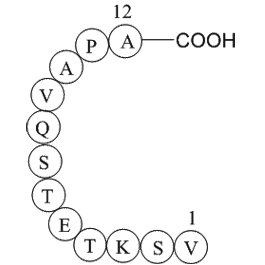
The SRP/SR Heterodimer: GTPase Tangos Drive Co-Translational Protein Targeting SRP and SR mediate a universally conserved protein targeting pathway responsible for the delivery of 25–30% of newly synthesized proteome to the eukaryotic endoplasmic reticulum (ER) or the bacterial plasma membrane 11
-
br Results and discussion GSTP is a Phase II
2022-02-11

Results and discussion GSTP1 is a Phase II cytoprotective and detoxifying enzyme. Due to its role in the detoxification of numerous endogenous and exogenous chemical agents (with electrophilic functional groups), individuals with Ile105Val mutation in this gene show enhanced risk of atopic disord
-
br Introduction Activation of the lipid sensing receptor
2022-02-11
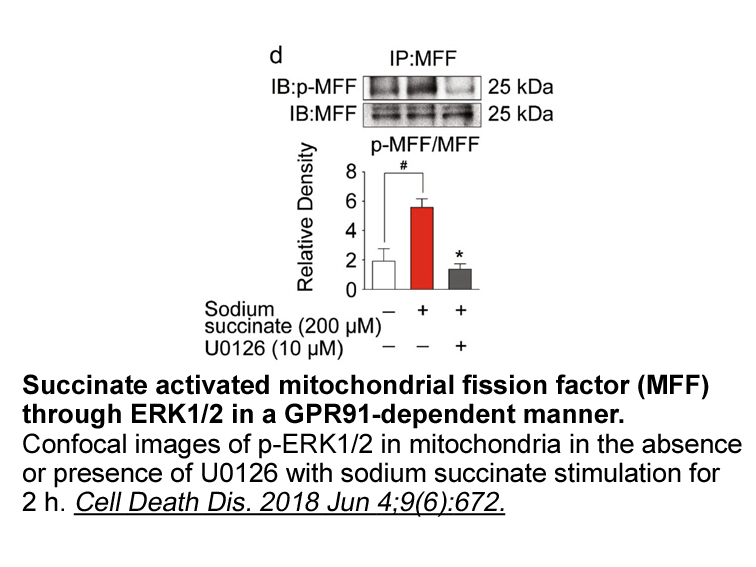
Introduction Activation of the lipid sensing receptor, GPR55, by lysophosphatidyl inositol (LPI) has been well documented, and implicated in endocannabinoid signaling [1]. Intracellular events resulting from GPR55 activation include; enhanced β-arrestin activity, calcium mobilization and ERK1/2 p
-
Introduction Although G protein coupled receptor GPR was con
2022-02-11
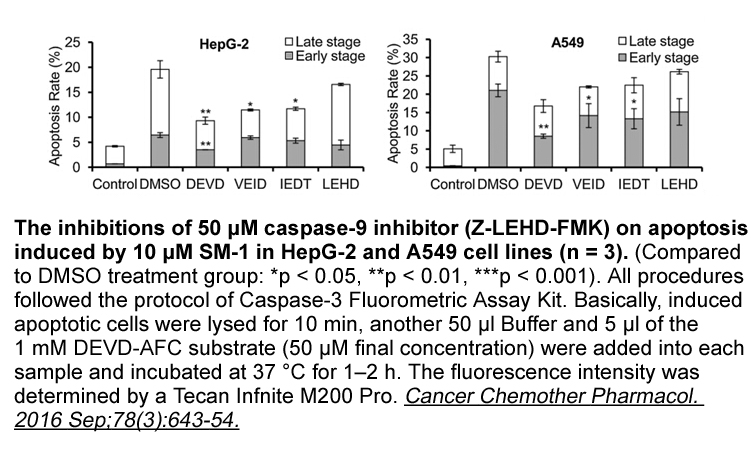
Introduction Although G-protein-coupled receptor 55 (GPR55) was considered a cannabinoid receptor, it differs phylogenetically from cannabinoid type 1 (CB1) and type 2 (CB2) receptors as it lacks the classic cannabinoid-binding pocket (Baker et al., 2006). GPR55 is sensitive to an array of cannabin
-
In recent years several DPP IV inhibitors have already
2022-02-11
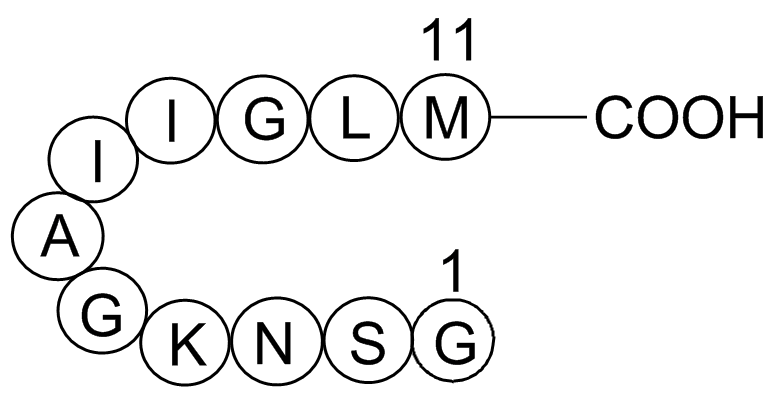
In recent years, several DPP-IV inhibitors have already been approved, such as sitagliptin, vildagliptin, saxagliptin, tenegliptin, alogliptin and linagliptin, etc. Among them, linagliptin (1, Fig. 1) is a non-peptide mimetic Dabrafenib Mesylate with a unique xanthine scaffold developed through hig
-
C http www apexbt com media diy images
2022-02-11
C136 is present in the joining region of two domains of NEIL1 and plays a critical role in the stability and dynamics of enzyme (Roy et al., 2007, Prakash et al., 2014). E181 resides in the conserved H2TH motif that binds to DNA and is very essential for enzyme activity. C136 is present in the near
-
br Reaction mechanism The dissimilarity between monofunction
2022-02-11
Reaction mechanism The dissimilarity between monofunctional and bifunctional glycosylases is that the monofunctional glycosylases removes the substrate base, leaving an intact AP site while the bifunctional glycosylases have an additional lyase activity. This intrinsic lyase activity is present i
8605 records 550/574 page Previous Next First page 上5页 546547548549550 下5页 Last page