Archives
- 2026-10
- 2026-09
- 2026-08
- 2026-07
- 2026-06
- 2026-05
- 2026-04
- 2026-03
- 2026-02
- 2026-01
- 2025-12
- 2025-11
- 2025-10
- 2025-09
- 2025-03
- 2025-02
- 2025-01
- 2024-12
- 2024-11
- 2024-10
- 2024-09
- 2024-08
- 2024-07
- 2024-06
- 2024-05
- 2024-04
- 2024-03
- 2024-02
- 2024-01
- 2023-12
- 2023-11
- 2023-10
- 2023-09
- 2023-08
- 2023-07
- 2023-06
- 2023-05
- 2023-04
- 2023-03
- 2023-02
- 2023-01
- 2022-12
- 2022-11
- 2022-10
- 2022-09
- 2022-08
- 2022-07
- 2022-06
- 2022-05
- 2022-04
- 2022-03
- 2022-02
- 2022-01
-
Similar to Rac Cdc and RhoA
2022-06-15
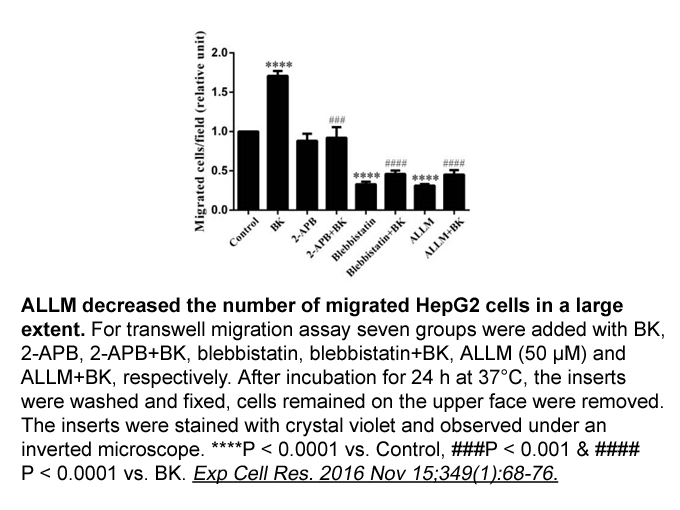
Similar to Rac1, Cdc42, and RhoA, expression of Rnd3 is also increased under hypoxic conditions, involving Hif1α mediated transcriptional activity. Here, downregulation of Rnd3 abolishes hypoxia-induced cell migration via a mechanism involving the chemokine receptor C-X-C motif chemokine receptor 4
-
ARQ 197 br Positive regulation of gene expression by Nrf br
2022-06-15
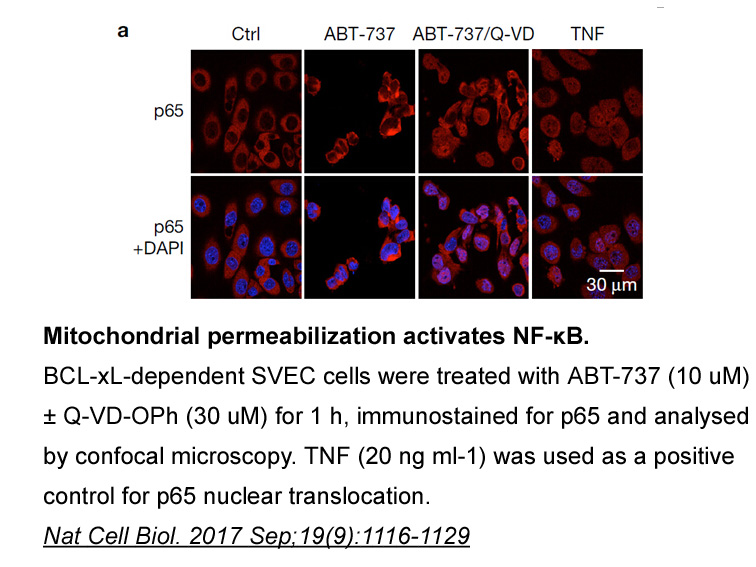
Positive regulation of gene ARQ 197 by Nrf2 Repression of Nrf2 by Keap1 Because many xenobiotic inducers of NQO1 and GST enzyme activities contain a thiol-reactive electrophilic moiety (i.e. are soft electrophiles), Paul Talalay and colleagues predicted in 1988 that they would be recognized w
-
The combination of niacin with a selective PGD receptor
2022-06-14
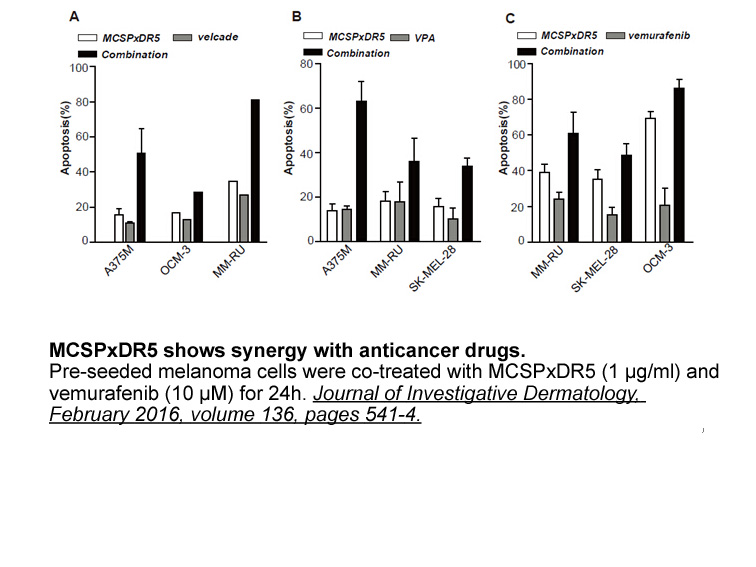
The combination of niacin with a selective PGD2 receptor antagonist laropiprant, designed to circumvent the flushing side effect of niacin, has been evaluated in the HPS2-THRIVE study and showed no clinically meaningful benefit when administered in patients on top of statin therapy [41]. Our data su
-
br MUTYH associated polyposis br MUTYH and its metal
2022-06-14
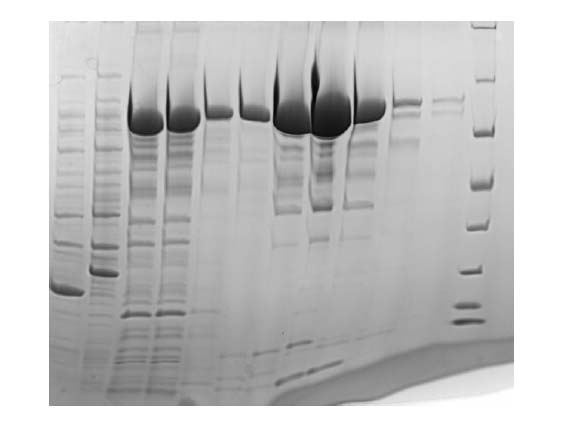
MUTYH-associated polyposis MUTYH and its metal cofactors MUTYH harbors two vital cofactors, both of which are located remotely from the active site (Fig. 6). One of these cofactors, a [4Fe-4S]2+(Fe-S) cluster, is chelated by four Cys residues in the N-terminal domain, and positions an Fe-S clu
-
There are three classes of receptors
2022-06-14
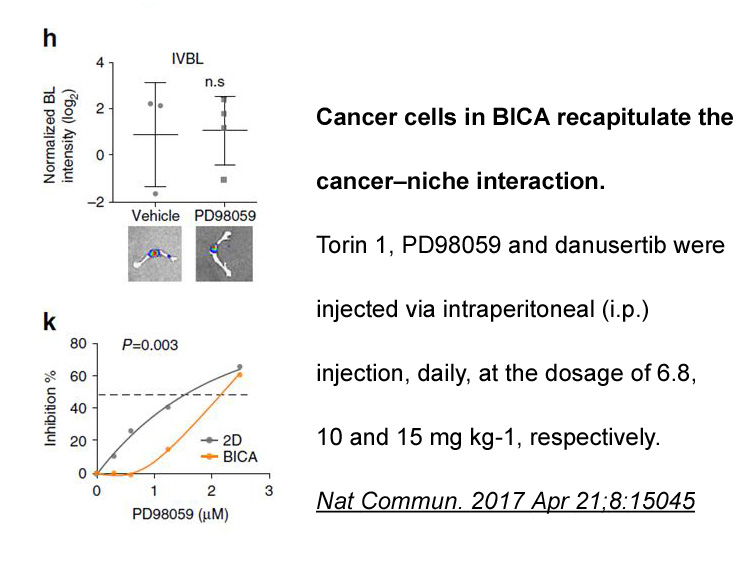
There are three classes of receptors for herpes virus gD have been described [18,24]. Among those three, herpes virus entry mediator A (HveA) is also known as HVEM. This receptor is a member of the tumor necrosis factor receptor (TNFR) superfamily [25]. The other class of receptors is HveC which is
-
br Introduction Edible bird s nest EBN
2022-06-14
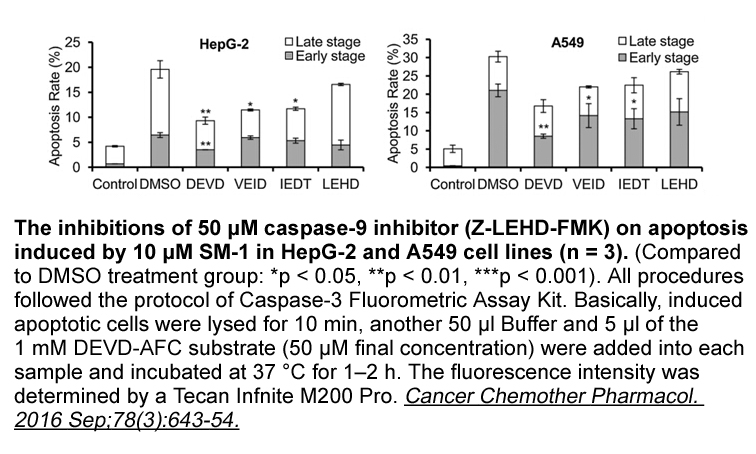
Introduction Edible bird's nest (EBN), known as the health and precious food, is produced from the saliva secretion of several different swiftlet species. Researches have shown the nutritional value of the EBN with the containing of glycoproteins, carbohydrates, essential amino acids, minerals an
-
H together with T also
2022-06-14

H109, together with T112, also forms a binding site for H+ (Chen et al., 2004; Harvey et al., 1999). H+-binding at this site also inhibits GlyR-mediated currents. Notably, the vicinity of neurons experiences changes in pH, to a mild extent in physiological conditions such as when neurons fire (Ches
-
br Transporter based brain targeting nano DDS Drug delivery
2022-06-14
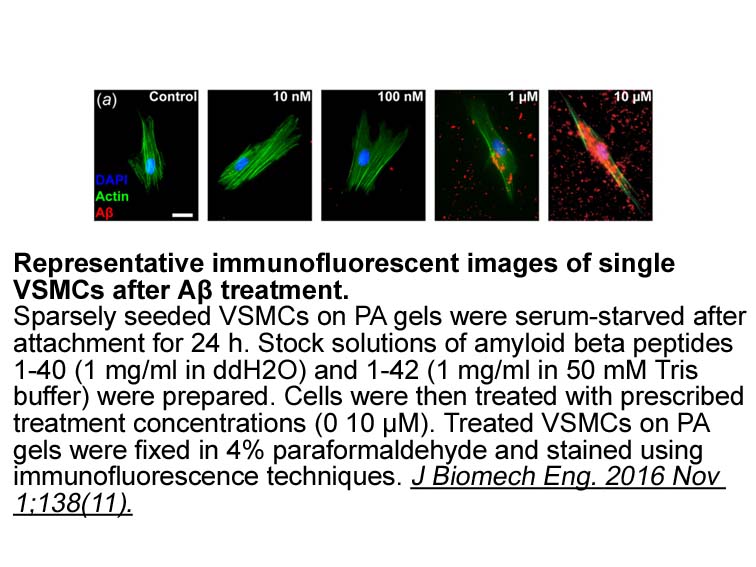
Transporter-based brain-targeting nano-DDS Drug delivery to the central nervous system (CNS) is still challenging due to the bloodbrain barrier (BBB)53., 54.. The BBB is a natural defense barrier protecting the Fulvestrant from harmful substances. Since only selected, neutral, lipophilic small m
-
This work was supported by the National
2022-06-14
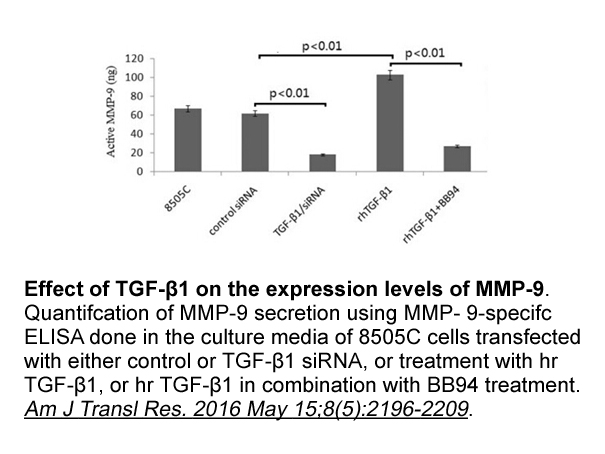
This work was supported by the National Natural Science Foundation of China (Grants 81471101 and 81870852), the Natural Science Foundation of Jiangsu Province (Grant BK20181146), the Natural Science Foundation of the Jiangsu Higher Education Institutions of China (Grants 18KJA320007 and 17KJB320018)
-
br Conflicts of interest br Acknowledgments This work was
2022-06-14
Conflicts of interest Acknowledgments This work was supported by the following funds: National Natural Science Foundation of China (81502222); Natural Science Foundation of Hubei Province (2013CFB370); Training program for Wuhan young and middle-aged medical backbone personnel (2017–51). In
-
Initially we carried out gap FRAP
2022-06-14
Initially, we carried out gap-FRAP experiments using the two-photon configuration of the confocal microscope. A SR101-positive astrocyte was targeted and a 5 × 5 μm square area was exposed to a laser illumination (5 flashes of 5 s each during 25 s). This procedure resulted in a bleaching of this ast
-
Two excellent GSMs with clear pharmacological
2022-06-14
Two excellent GSMs with clear pharmacological effect across rats, dogs, monkeys, and human subjects are BMS-932481 and BMS-986133 with IC50 at 6.6 and 3.5 nM to reduce Aβ42, respectively. Both GSMs exhibit dose- and time-dependent activity in vivo by decreasing Aβ1-42 and Aβ1-40 levels while increas
-
br Concluding remarks In this small material
2022-06-14
Concluding remarks In this small material of thirteen pituitary tumors of various kinds, we could not run statistical analysis. However, with a follow-up period of up to five years, we show that Disclosure Statement Acknowledgments Introduction Galanin is a 29/30-residue neuropeptide fo
-
A majority of aptamer based biosensors termed aptasensors is
2022-06-14
A majority of aptamer-based biosensors (termed aptasensors) is based on structure-switching process of aptamer probes upon target binding [[12], [13], [14], [15]]. And canonical structure-switching aptamer probes are strand-displacement aptamer probes, aptamer beacons and split aptamers [[16], [17],
-
We detected the FFAR protein with a
2022-06-14
We detected the FFAR2 protein with a molecular mass of about 50 kDa, which is comparable to the main band detected in pigs (Li et al., 2014) but different from the calculated size based on the sequence (Wang et al., 2009). The size difference can be explained, at least in part, by glycosylation site
8603 records 482/574 page Previous Next First page 上5页 481482483484485 下5页 Last page