Archives
- 2026-07
- 2026-06
- 2026-05
- 2026-04
- 2026-03
- 2026-02
- 2026-01
- 2025-12
- 2025-11
- 2025-10
- 2025-09
- 2025-03
- 2025-02
- 2025-01
- 2024-12
- 2024-11
- 2024-10
- 2024-09
- 2024-08
- 2024-07
- 2024-06
- 2024-05
- 2024-04
- 2024-03
- 2024-02
- 2024-01
- 2023-12
- 2023-11
- 2023-10
- 2023-09
- 2023-08
- 2023-07
- 2023-06
- 2023-05
- 2023-04
- 2023-03
- 2023-02
- 2023-01
- 2022-12
- 2022-11
- 2022-10
- 2022-09
- 2022-08
- 2022-07
- 2022-06
- 2022-05
- 2022-04
- 2022-03
- 2022-02
- 2022-01
- 2021-12
- 2021-11
- 2021-10
- 2021-09
- 2021-08
- 2021-07
- 2021-06
- 2021-05
- 2021-04
- 2021-03
- 2021-02
- 2021-01
- 2020-12
- 2020-11
- 2020-10
- 2020-09
- 2020-08
- 2020-07
- 2020-06
- 2020-05
- 2020-04
- 2020-03
- 2020-02
- 2020-01
- 2019-12
- 2019-11
- 2019-10
- 2019-09
- 2019-08
- 2019-07
- 2019-06
- 2019-05
- 2019-04
- 2018-11
- 2018-10
- 2018-07
-
br Experimental Procedures br Author Contributions br Acknow
2020-07-01
Experimental Procedures Author Contributions Acknowledgments Introduction Oxysterols came to prominence in the late 1970\'s with the oxysterol hypothesis which proposed that the suppressive effect of cholesterol on its own synthesis is mediated through oxysterols not by cholesterol itsel
-
br Introduction Addiction to opioids such as morphine is
2020-07-01
Introduction Addiction to opioids such as morphine is a chronic disorder that affects the mesocorticolimbic dopaminergic pathway in the brain. Activation of the pathway ultimately leads to dopamine release in the nucleus accumbens (NAc) (Di Chiara et al., 1998) and stimulation of dopamine recepto
-
Structural homology modelling Intensive Phyre modelling was
2020-07-01
Structural homology modelling. Intensive Phyre2 modelling [44] was performed using the primary amino FK-228 sequence of A1S_0222 as input to generate an atomistic 3D-homology model of A1S_0222. The fit to the SAXS data of the homology model as well as the fit to the data of the E. coli adenine-N6-DN
-
In conclusion as illustrated in Fig G in response
2020-07-01
In conclusion, as illustrated in Fig. 5G, in response to MNNG-induced DNA damage, PARP-1 appears to have dual roles in determining the cell fate in response to MNNG: PARP-1 activation is the cause of non-apoptotic cell death via ATP depletion and PARP-1 activation is able to elicit a self-protective
-
Similarly LTD concentration dependently enhanced AQP
2020-07-01
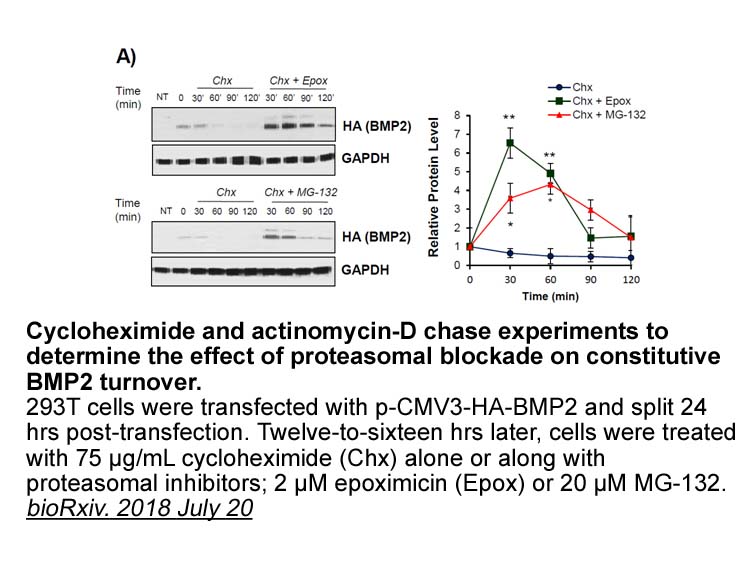
Similarly, LTD4 concentration-dependently enhanced AQP4 expression in astrocytes (Fig. 3). The LTD4-enhanced AQP4 expression was not affected by pranlukast but inhibited by Bay u9773, a non-selective CysLT1/CysLT2 receptor antagonist [33]. Because no selective CysLT2 receptor antagonists are current
-
Studies also provide evidence that cytokines such as TGF
2020-07-01
Studies also provide evidence that cytokines such as TGF-β, a TH3-type cytokine, may also play a role in airway remodeling. Data obtained by Cohen et al suggest that TGF-β1 can induce human BSMC proliferation by increasing the expression of IGFBP-3. Hence, the mitogenic action of TGF-β1 could be rel
-
dopaminergic The in vitro cytotoxicity of
2020-06-30
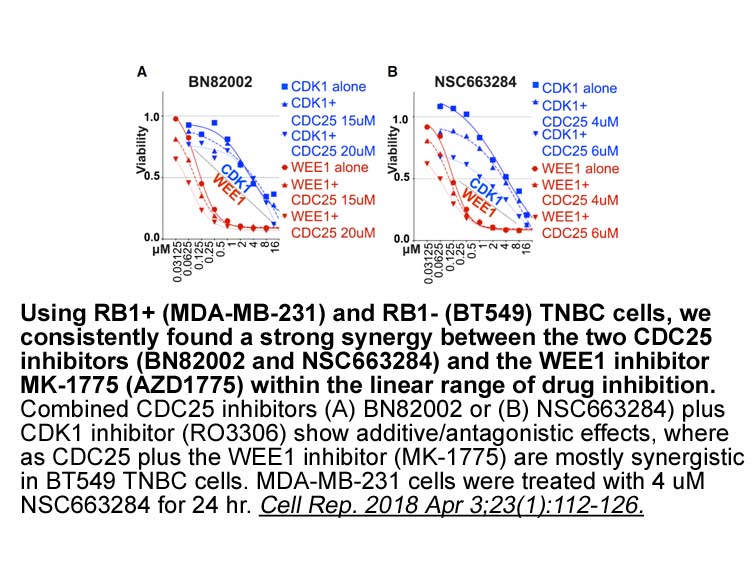
The in vitro cytotoxicity of the prodrugs was assessed in the LS174T human colon cell line (). The results were found to reflect the stability of the prodrugs, with the unstable urea compounds ( and ) giving relatively poor cytotoxicity differentials between prodrugs and parents (i.e., approximately
-
br Discussion We are reporting a cryptic insertion
2020-06-30

Discussion We are reporting a cryptic insertion of chromosome 22 material (EWS) to the long arm of chromosome 11 (11q24, FLI-1) recognizable by FISH in Colistin Sulfate australia exhibiting trisomy 8 as the sole cytogenetic anomaly. In ES and PNET tumors, trisomy 8 is the most common secondary ab
-
The interface between the E
2020-06-30
The interface between the E3 ligase and the E2 enzyme can vary, and ZNF451 and SP-RING ligases stabilize this interaction via noncovalent binding to a scaffold SUMO (SUMOB) on the backside of the E2 (Cappadocia et al., 2015; Eisenhardt et al., 2015; Streich & Lima, 2016). By contrast, RanBP2 does no
-
br Materials and methods br Results br
2020-06-30
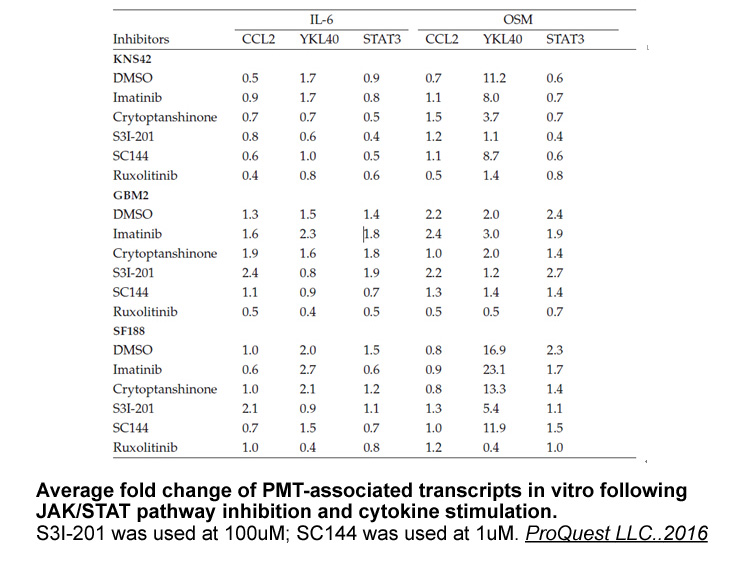
Materials and methods Results Discussion Structural analysis of dnmt3 sequences of different ploidy fish cloned in this study showed high similarities to zebrafish sequences, which also contained a unique N-terminal motif and a calponin homology (CH) domain, a conserved proline-tryptophan-t
-
br Experimental Procedures br Acknowledgments The authors
2020-06-30
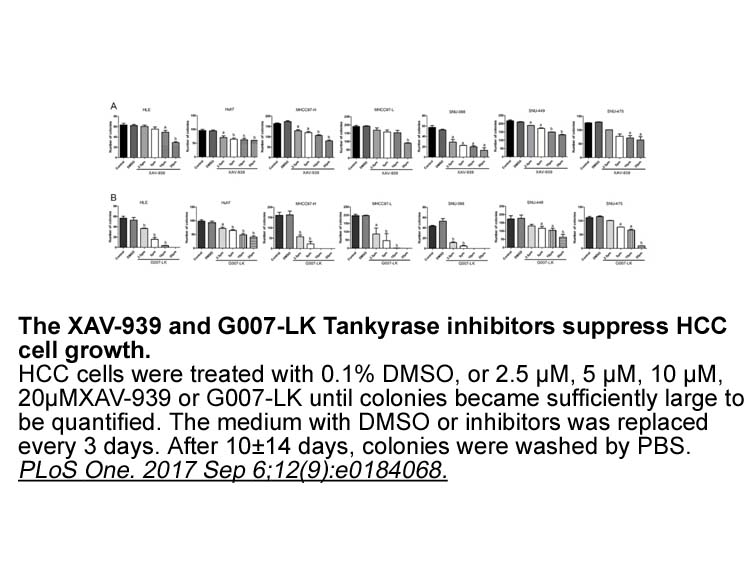
Experimental Procedures Acknowledgments The authors wish to thank P. Costet (University of Bordeaux) and Véronique Guyonnet-Duperat (FR TransBioMed, Plateforme de Vectorologie, University of Bordeaux) and Prof. Nils-Göran Larsson and Dr. Bettina Bertalan (Max Planck Institute for Biology of Ag
-
We have performed our MSP analyses
2020-06-30
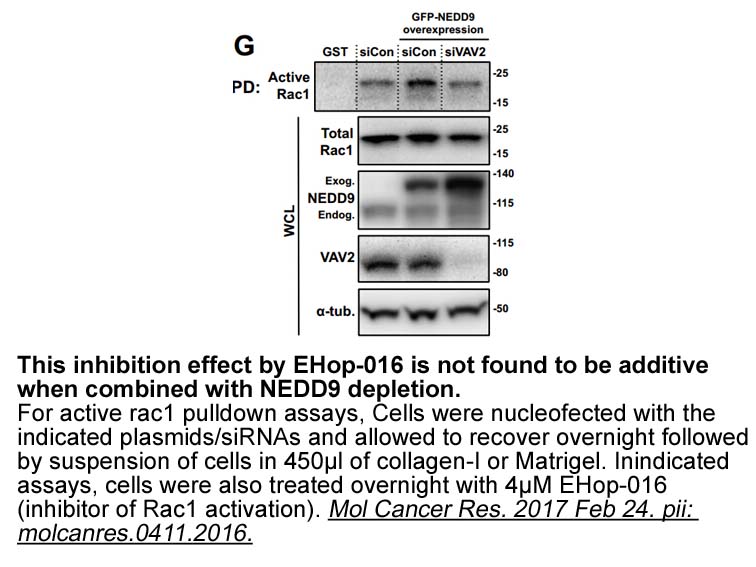
We have performed our MSP analyses as real-time PCR using SybrGreen (Fig. 2). The results of the beta-actin PCR vary in each sample group because the amount of DNA for bisulfite treatment was adjusted to a constant volume of serum (500μl) rather than to equal amounts of DNA. Because we expected lowe
-
On the other hand p responds
2020-06-30
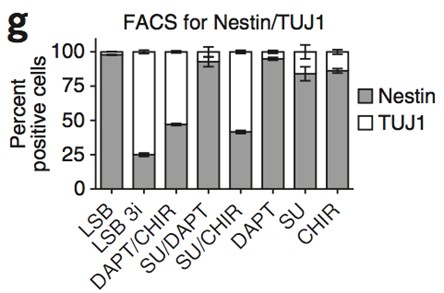
On the other hand, p38 responds to environmental stress, including ultraviolet light, heat, osmotic shock, and inflammatory cytokines (Pearson et al., 2001, Kumar et al., 2003), and is activated in astrocytes after ischemia-like injury (Yung and Tolkovsky, 2003, Niu et al., 2009). Moreover, p38 acti
-
Atipamezole hydrochloride Fig S an adrenoceptor antagonist
2020-06-30
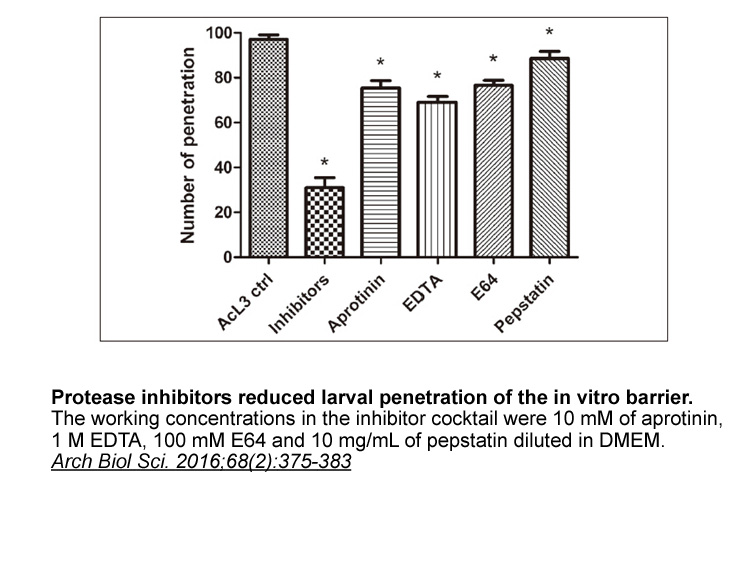
Atipamezole hydrochloride (Fig. S1), an α2-adrenoceptor antagonist, is commonly used by veterinarians to recover animals from sedation-anesthesia induced by α2-adrenoceptor agonists. Recent studies in animals suggest that atipamezole might have beneficial effects in gp products damage repair, it al
-
Chemokines act as ligands for the chemokine
2020-06-30
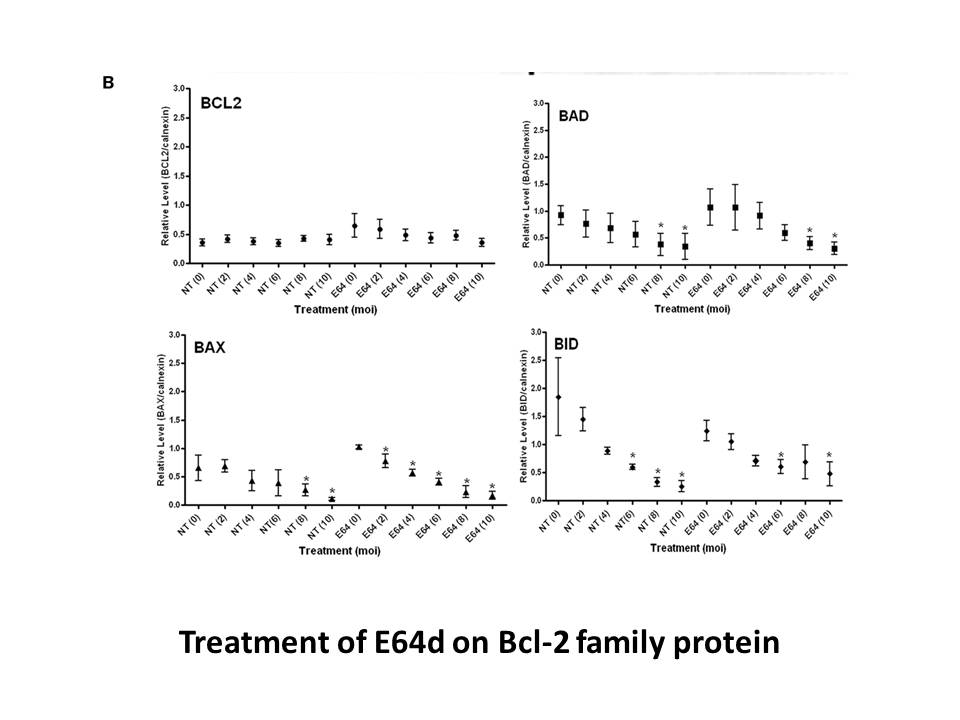
Chemokines act as ligands for the chemokine receptors, which possess 7-transmembran domain-type proteins functionally coupled to G proteins. Leukocytes express 19 chemokine receptors which control their influx and activation at the site of inflammation. Human neutrophils express both CXCR-1 and CXCR
16755 records 865/1117 page Previous Next First page 上5页 861862863864865 下5页 Last page